
Tune the instrument of you.
You are not a stack of levers. You are a living, listening, tensional network. This is a friendly primer on the two ideas that quietly changed how we train — fascia and biotensegrity — and how Flowbands are designed to tune them.
What fascia is — and why it quietly runs the show.
Fascia is the connective fabric that wraps, links, and listens to every muscle, bone, vessel, and nerve in your body. It's one continuous tissue — a body-wide web that gives you shape, transmits force, and senses what's happening from the inside out.
For decades, anatomy treated fascia like packaging — something to cut through to find the "real" parts. We now know it is more like an instrument: a tensional, fluid-filled membrane that stores energy, transmits force across joints, and is densely populated with sensory nerves.
When fascia is hydrated, glide-y and well-organized, you feel springy and connected. When it dehydrates, gets matted, or stops getting varied input, you feel stiff, fragile, and disconnected from your own body.
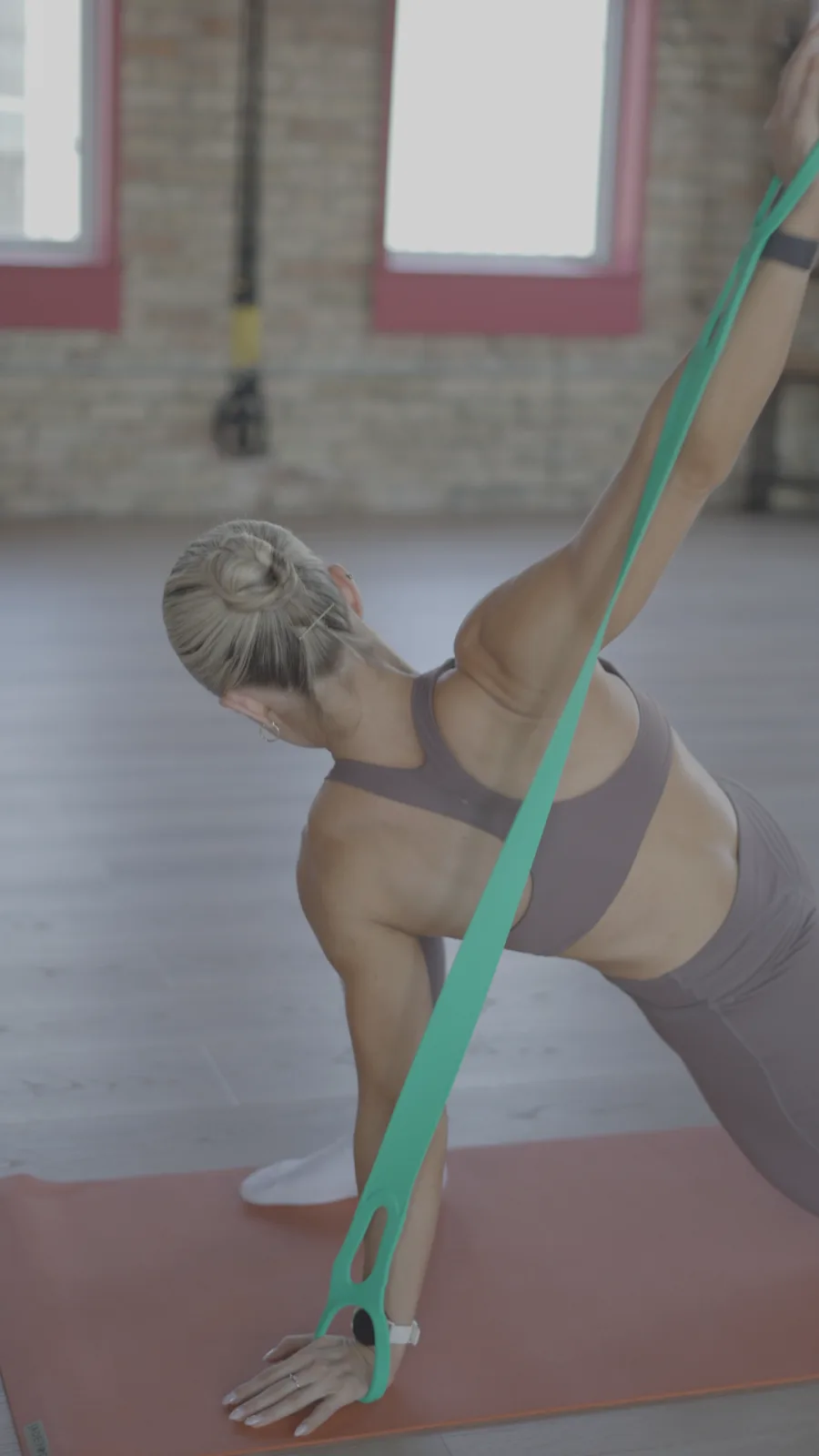
Top 3 factors when optimizing fascia
Hydration & glide
Fascia is mostly water-bound matrix. Sip well, move often, and ask layers to slide past each other so they don't get sticky.
Varied loading
Stretch, compression, oscillation, end-range work. Fascia organizes along the lines you use — give it many lines.
Slow, mindful input
Fascia adapts on a slower clock than muscle. Patient, breath-led tension teaches the network to reorganize without bracing.
Biotensegrity — your body is a tensional instrument.
Biotensegrity is the model that says your body isn't a tower of bricks stacking on each other. It's a continuous balance of compression (bones) floating inside a web of tension (fascia, ligaments, muscle). Push anywhere, and the whole instrument hums.
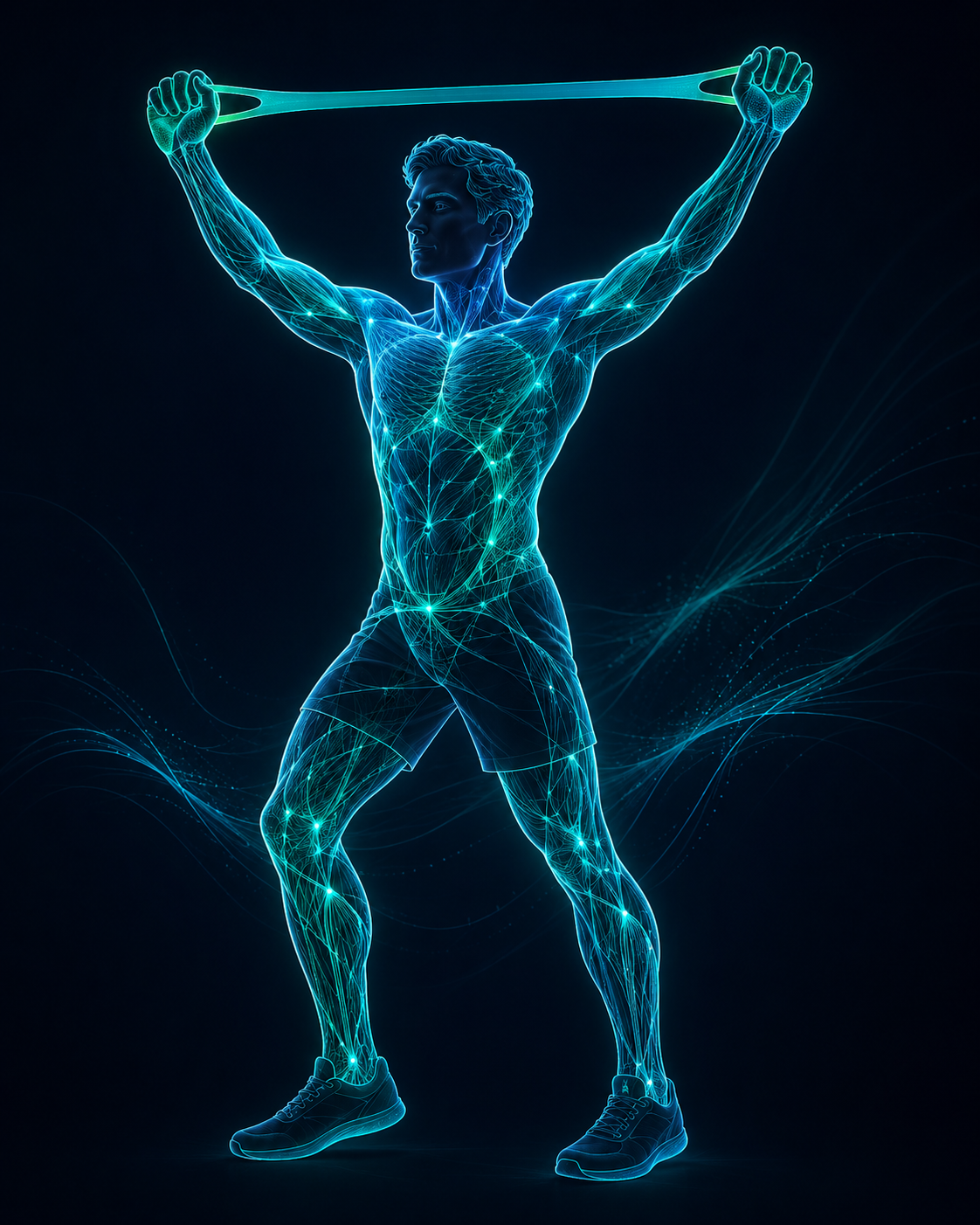
In a tensegrity structure, no piece works alone. Load anywhere redistributes everywhere. That is exactly how your living body handles force — which is why a sticky hip can echo as a cranky shoulder, and why one good breath can change your whole posture.
When the network is well-tuned, force flows. You feel light, organized, and resilient. When tension is locally jammed or globally flat, force gets dumped into joints and you feel "off."
Top 3 factors when optimizing biotensegrity
Whole-body chains
Train slings, spirals, and lines — not isolated muscles. The network needs to feel itself as one piece.
Balanced tension
Tune over-pulled regions down and under-toned regions up. Symmetry isn't pretty — it's efficient.
Elastic exchange
Train the bounce: load, store, return. A healthy tensegrity returns energy instead of swallowing it.
How Flowbands tune the instrument.
Flowbands are designed as a wearable, tunable layer for your tensional network — essentially a fascial-biotensegral exoskeleton you can dial up or down. Paired training across the spectrum of flow gives the network something it rarely gets from a dumbbell: a continuous, listening partner.
The Spectrum of Flow. Three tensions — Gentle (Sea Green), Ultralight (Aura White), Firm (Aqua Blue) — let you meet your body where it actually is today. Regulate when you're frayed. Calibrate when you're scattered. Express when you're ready to play.
Paired training. Used in pairs, the bands create circuits across the body — compression here, traction there — so you're not loading one muscle, you're tuning a chain.
Unique design. Continuous silicone (no clasps), variable stretch, low-profile handles, and a texture that grips skin without biting it. The band becomes part of you for the set, not a tool you fight.
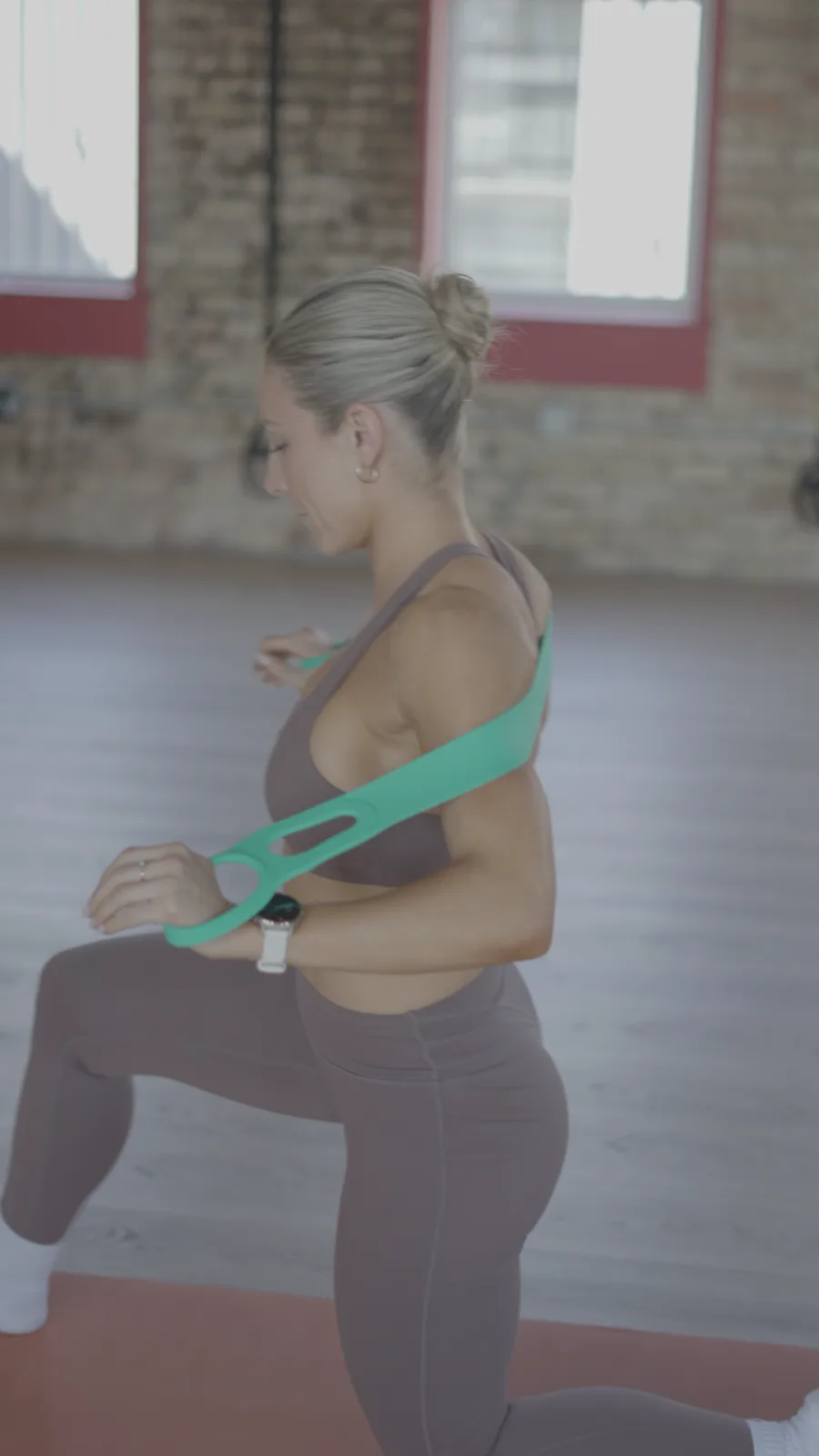
Continuous tension
Silicone returns force the whole range. The network gets a real, listening partner — not a dead weight at the bottom.
Compression + traction
Paired use creates pressure and pull at once — exactly the inputs fascia and joints crave to reorganize.
Tunable across the spectrum
Three tensions, used solo or stacked, dial the dose from down-regulating to fully expressive.
Why this really matters.
The body you actually live in is a fluid, sensory, springy network. Train it like one and your "workout" becomes something else: a tuning session for the instrument you carry everywhere.
Hydration is structural
Dehydrated fascia loses glide and bounce within hours. Water + minerals + movement is the real cocktail.
Glide before grind
Slow, varied movement before load wakes the layers up so they slide instead of tearing at each other.
Energetics — store and return
Healthy fascia is a spring. Train rebounds and oscillations, not just slow grinds, to keep elasticity high.
Perception is the upgrade
Fascia is one of your most sensory tissues. The more you feel, the better you move. Slow it down to feel more.
Grab a band. Join the movement.
You don't need to understand any of this to feel it. Loop a band around your ribs, take a breath, and the instrument starts to tune itself. We'd love for you to come play.